The squeaky wheel gets the grease.
It is a useful saying in life. It is a terrible operating model for cold chain logistics.
For years, pharma companies were told that more visibility meant more control. More sensors. More pings. More condition data. More alerts.
The theory made sense: if you know more, you can act faster. But in practice, many visibility programs trained teams to chase noise.
A shipment triggers a temperature alert, and the machine starts moving. Someone checks the dot on the map. Someone pulls the graph. Someone emails the carrier. Someone asks the forwarder for an update. Someone opens a case. Someone escalates internally. Everyone follows the shipment making the most noise.
That feels like control.
But usually, it's just hustle.
The uncomfortable truth is that the loudest shipment is not always the shipment with the most risk.
An example:
-
-
A shipment can trigger a temperature out of range alert and still have 97% of its stability budget remaining, 15 hours of packaging thermal life left, and only two hours until delivery
-
Another shipment can have no device alert at all, but only 40% stability budget remaining, 15 hours of qualified packaging thermal life left, an eight-hour dwell delay due to unforeseen customs delays, and a 12-hour last-mile leg still ahead.
-
The first shipment is loud.
The second shipment is dangerous -- and nobody even knows about it!
Most cold chain monitoring programs are still built to chase the first one.
That is the squeaky wheel fallacy: assuming the shipment creating the most noise is the shipment most deserving of attention. In a network running tens of thousands or hundreds of thousands of shipments a year, that fallacy becomes expensive, distracting, and operationally dangerous.
Because device & carrier alerts are not risk. They are reacting to surroundings. And they are symptoms.
Some symptoms matter. Some do not. Some are early signs of real trouble. Others are harmless artifacts of a threshold, a device setting, a temporary delay, a battery issue, or a condition that looks bad in isolation but means very little once you understand the holistic picture.
And getting to that holistic picture is expensive. $150-$300 per shipment in white-glove hyper-care and monitoring costs, anyone?
Why so expensive? Chasing down context on whether the risk is real is a product of human eyeballs that scale proportionally to the volume of shipments. Simply put, the more shipments you have, the more people you're going to pay to monitor them.
The problem is not the device. The problem is pretending the device alert is the decision.
A temperature alert without context does not tell you whether product is at risk. A delay alert does not tell you whether the delay matters. A no-ping event does not tell you whether intervention is required. A light alert does not tell you whether quality should care.
It only tells you something happened.
The real question is whether it matters.
The TOP 5 Inputs That Determine Real Shipment Risk
A device alert should be one input into a broader risk model. The question is not whether a shipment made noise. The question is whether the shipment is trending toward product risk, customer disruption, quality impact, or avoidable cost.
That requires a different set of questions.
First: how much stability budget remains?
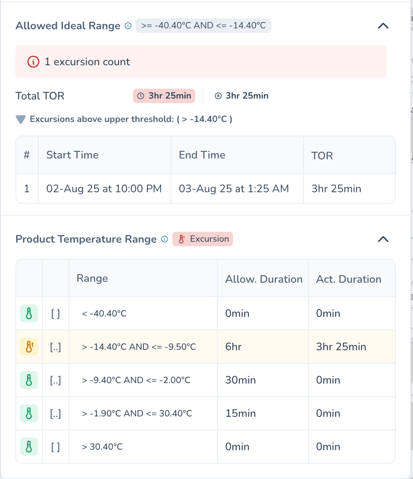
A product may briefly move outside its shipping temperature range and remain well within its allowable stability profile. Another shipment may show no new alert, but have already consumed enough stability that the next delay, handoff, or ambient exposure materially changes the risk. The alert is not the risk. Remaining stability is where risk starts to become real.
Second: how much packaging thermal life remains?
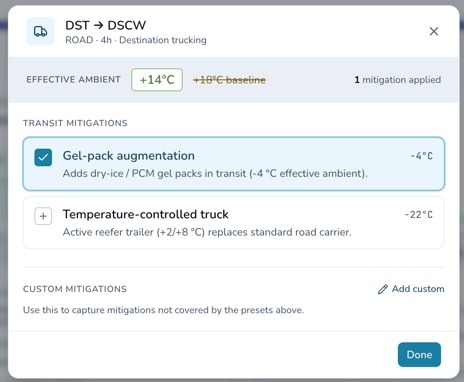
A delay only matters in the context of how much protection the packaging has left. A shipment two hours from destination with 15 hours of thermal life remaining is very different from a shipment with the same 15 hours remaining but 20 hours of predicted journey ahead. Same number. Completely different decision.
Third: what is the dynamic thermal life?
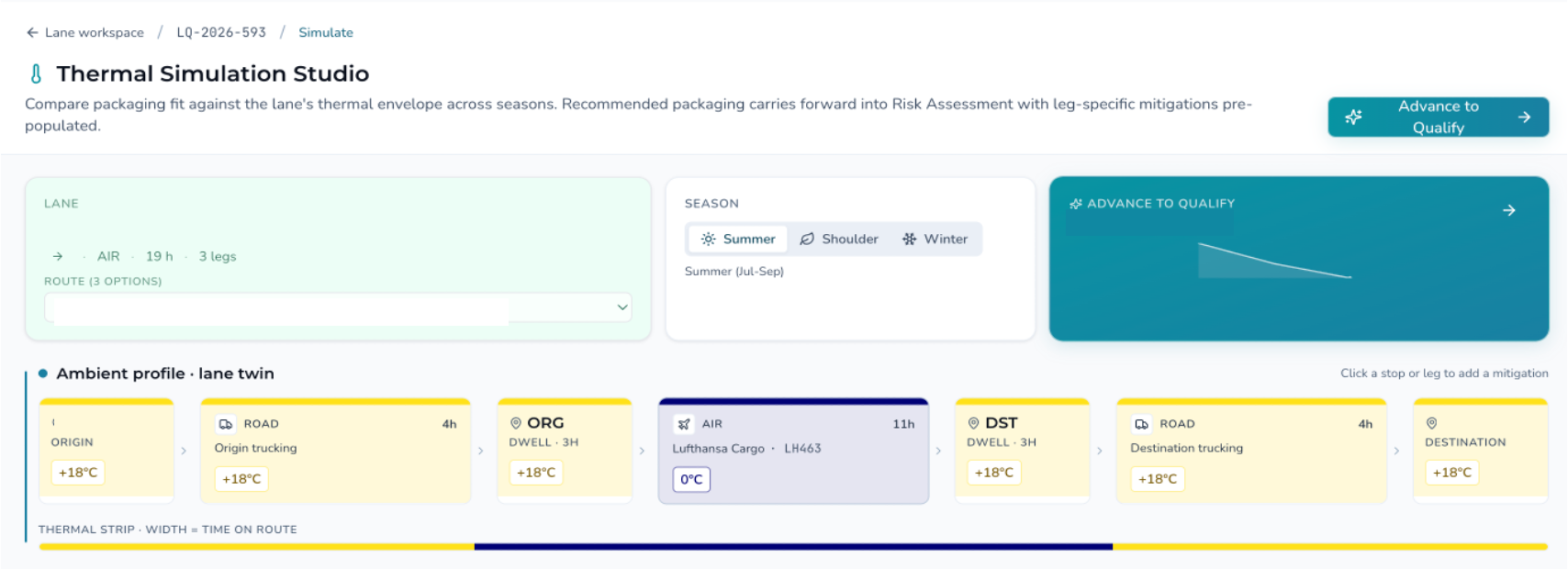
Packaging does not perform in the real world exactly the way it performs in a chamber study. Ambient temperature, dwell location, seasonality, mode, tarmac exposure, customs delay, and facility performance all change the practical runway. “Qualified for 96 hours” is useful. “Given what is happening right now, how much protection do I really have left?” is much more useful.
Fourth: who is the carrier, and how do they perform?
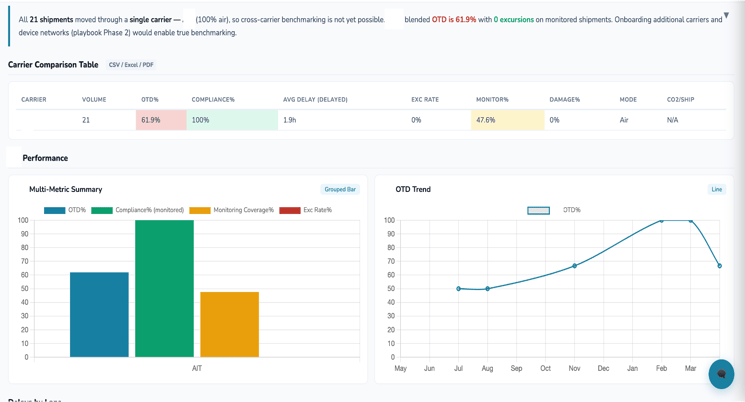
Not all delays are created equal. A delay with a high-performing carrier on a well-understood lane may be routine. A delay with a carrier that has a history of missed milestones, poor handoff visibility, late recovery, or temperature-control issues may be a leading indicator of something worse. Carrier performance changes the confidence level of the shipment.
Fifth: An Accurate Predicted Time of Arrival (PTA)
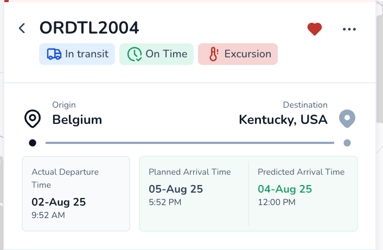
PTA should account for distance remaining, remaining stops, route flow, historical lane and carrier performance, dwell patterns, weather, traffic, holidays, labor disruptions, and other external events. A static ETA tells you what was supposed to happen; an accurate PTA tells you what is likely to happen now, which determines whether the remaining stability budget, packaging life, receiving window, and release timeline are actually at risk.
The Shift
This is the shift the industry needs to make: from alert-first to risk-first.
From chasing symptoms to understanding outcomes.
From monitoring shipments to triaging risk.
From asking, “Which shipment made noise?” to asking, “Which shipment is most likely to fail, how much time do we have, and what can we still do about it?”
The future of cold chain monitoring is not a control tower full of people staring at dots on a map and chasing every flashing light. It is a system that understands which shipments are fine, which shipments are trending toward risk, and which shipments need action now.
That also means the future is not more alerts. It is better silence.
The most valuable system is not the one that screams most often. It is the one that knows when not to bother a human. It silences safe alerts. It escalates hidden risk. It prioritizes based on product impact. It ties recommendations back to SOPs, stability, packaging, lane performance, and live transportation conditions.
The squeaky wheel may still need grease.
But in pharma logistics, the quiet wheel might be the one about to fall off.
Device alerts tell you when something happened.
Decision intelligence tells you whether it matters.
And in cold chain, that is the only question that counts.
For every shipment, on every lane.